
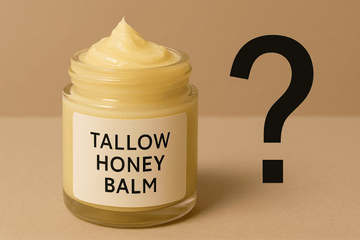
If you've been scrolling through TikTok or Instagram lately, chances are you've seen one of those dreamy ads showing off creamy tallow honey balms for acne. They're everywhere — glowing skin, sweet honey, glowing reviews. But what's really inside those jars, and do they truly work for acne-prone skin? Let's unpack the truth behind the tallow and honey hype.
Why Tallow Is a Dream for Acne-Prone Skin
Beef tallow is nothing new. It's one of nature's oldest skincare ingredients, once a staple in traditional beauty routines across the world. The reason it's making a comeback today? It works.
Tallow has a fatty acid profile almost identical to our skin's natural sebum. This means it deeply nourishes without clogging pores or causing irritation. It's rich in fat-soluble vitamins A, D, E, and K — powerful nutrients that help restore the skin barrier and calm inflammation, which is often the root cause of breakouts.
If you've been dealing with sensitive, reactive, or acne-prone skin, tallow can feel like a relief. No sting. No dryness. Just calm, hydrated skin that can finally breathe.


Honey in Skincare: Sticky, Sweet, and a Little Misunderstood
Honey is another ancient remedy that keeps popping up in acne products — and for good reason. Raw honey is antibacterial, anti-inflammatory, and a natural humectant that draws moisture into the skin.
But here's something most honey balm ads don't mention: honey is water-soluble. That means for your skin to truly benefit from honey's healing properties, it needs to be applied directly to clean, damp skin on its own — not suspended in a thick, oil-based balm.
The Honey Mask Ritual
If you want to experience the real magic of honey, the best way is still the simplest. Go to your local bio shop and grab a jar of raw, unprocessed honey — yes, the kind made for eating. That's your mask.
Here's how to do it:
- Gently cleanse your face and pat dry.
- Apply a thin layer of raw honey to damp skin.
- Leave it on for about 15 to 20 minutes.
- Rinse off with lukewarm water and pat dry.
Follow @thryvewithcandice for more natural skincare tips!
It's soothing, balancing, and leaves your skin soft and calm. Just make sure you're not allergic — always patch test first.
Now comes the important part: don't skip the moisturizer. After rinsing off the honey, your skin needs nourishment and a protective layer to seal in that hydration.
Why Most Tallow Honey Balms Aren't Ideal for Acne
A lot of the tallow-honey balms trending online contain more than just those two ingredients. To get that creamy, balm-like texture, most brands add beeswax and olive oil.
And while these ingredients are often marketed as natural and nourishing, they're not ideal for acne-prone skin. Beeswax forms a thick layer on the skin, which can trap oil, bacteria, and sweat — especially if your skin is already struggling. Olive oil is known for its antioxidant content, but it also ranks high on the comedogenic scale, meaning it can clog pores.
Let's be honest: these balms are lovely for lip care or dry elbows, but for breakouts? Not the best choice. They might feel rich and luxurious, but that's not always what acne-prone skin needs.
The Better Alternative for Acne-Prone Skin
So what should you use instead? After your honey mask, seal in moisture with a clean, acne-friendly tallow product.
For a minimalist approach, choose our award-winning Tallow + Jojoba Minimalist Butter. It's fragrance-free, simple, and mimics your skin's natural oils — ideal for sensitive and breakout-prone skin.
Want plant-based actives that support healing? Try our bestselling trio:
- Family Daisy: With calming chamomile extract — perfect for acne-prone, irritated, reactive skin.
- Fancy Rose: Contains bakuchiol, a natural alternative to retinol that supports cell turnover without harshness.
- Sweet Orange: Uplifting and clarifying, enriched with orange peel wax for antioxidant support.
These are your acne-safe tallow heroes. No beeswax. No olive oil. Just traditional ingredients that let your skin breathe and heal.
Frequently Asked Questions
Can tallow help with acne?
Yes, for many people. Tallow's fatty acid profile closely mirrors human sebum, which means it nourishes the skin without triggering excess oil production. Its fat-soluble vitamins A, D, E and K also help reduce inflammation — a key driver of acne. Unlike heavy synthetic formulas, tallow allows the skin to breathe and heal naturally.
Is beeswax bad for acne-prone skin?
Beeswax is not ideal for acne-prone skin. It creates a thick occlusive layer that can trap oil, bacteria, and sweat against the skin. For occasional use on very dry areas it can be fine, but for facial use on breakout-prone skin, it's best avoided.
Should I use raw honey directly on my face for acne?
Yes — raw, unprocessed honey applied directly to clean, damp skin is an effective and gentle way to use honey's antibacterial and anti-inflammatory properties. Apply, leave for 15–20 minutes, and rinse thoroughly. Always patch test first if you've never used honey on your skin.
What makes the Minimalist Butter better than a honey balm for acne?
The Tallow + Jojoba Minimalist Butter contains only grass-fed tallow and jojoba oil — no beeswax, no olive oil, no fragrances. Both ingredients are non-comedogenic and closely mimic the skin's natural sebum, making them genuinely compatible with acne-prone skin without clogging pores or trapping bacteria.
Are Nana Latta products suitable for the whole face if I have acne?
Yes. Our tallow products are specifically formulated without comedogenic oils, synthetic fragrances, or preservatives that commonly worsen acne. The Minimalist Butter (unscented) and Family Daisy (with chamomile) are our top picks for acne and breakout-prone skin.


