
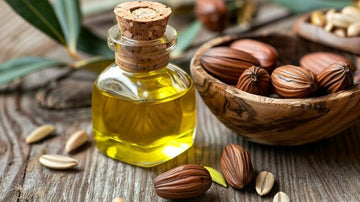
If you struggle with acne or oily skin, you've probably heard that oils are the enemy. The truth is quite the opposite — the right oil can transform your skin. Jojoba oil is one of nature's most remarkable skincare ingredients, and when paired with our tallow-based formulas, it delivers exceptional results for problem skin.
What Makes Jojoba Oil Unique?
Jojoba (pronounced ho-HO-bah) is technically not an oil at all — it's a liquid wax. This distinction matters enormously for your skin. Unlike most plant oils, jojoba wax is remarkably similar in structure to human sebum, the oil naturally produced by your skin's sebaceous glands. This makes it one of the most biocompatible skincare ingredients available.
Jojoba Oil for Acne-Prone Skin
One of the most persistent myths in skincare is that oily skin needs to be dried out. In reality, stripping the skin of oil causes it to overproduce sebum — triggering more breakouts. Jojoba oil works with your skin's natural chemistry to regulate sebum production. It sends a signal to the sebaceous glands that the skin is adequately moisturized, helping to normalize oil production over time.
- Non-comedogenic: Jojoba does not clog pores — its waxy structure cannot penetrate and block them the way heavier oils can.
- Anti-bacterial properties: Jojoba contains natural antimicrobial compounds that help reduce acne-causing bacteria on the skin surface.
- Reduces inflammation: The myristic acid in jojoba has anti-inflammatory effects that soothe red, irritated breakouts.
- Balances sebum production: Regular use helps normalize oil production for lasting improvement.
The Power of Jojoba + Tallow Together
At Nana Latta, we combine jojoba with grass-fed beef tallow in our Tallow + Jojoba Minimalist Butter. This combination is especially powerful because tallow and jojoba complement each other perfectly. Tallow provides deep nourishment with fat-soluble vitamins A, D, E and K, while jojoba's waxy structure creates a breathable, non-occlusive layer that regulates oil and protects without suffocating the skin.
This unscented, minimal formula is ideal for sensitive, reactive, or acne-prone skin that reacts to fragrance or complex ingredient lists.
How to Use Jojoba-Based Skincare for Best Results
Apply a small amount of our Tallow + Jojoba Minimalist Butter to clean, slightly damp skin morning and evening. Less is more — a pea-sized amount is typically sufficient for the entire face. Give your skin 4 to 6 weeks to adjust and normalize before evaluating results.
Frequently Asked Questions
Is jojoba oil good for acne?
Yes. Jojoba is one of the best oils for acne-prone skin because it closely mimics human sebum, helping to regulate oil production rather than add to it. Its non-comedogenic nature means it won't clog pores, and its antimicrobial properties help reduce acne-causing bacteria.
Can jojoba oil make acne worse?
Pure jojoba oil used correctly should not make acne worse. In fact, most people see improvement over time. Initial purging (a temporary increase in breakouts as your skin adjusts) can sometimes occur in the first 2 to 3 weeks. This is a normal skin adjustment process, not an allergic reaction.
What is the difference between jojoba oil and tallow for skin?
Jojoba is a liquid wax that regulates sebum and creates a breathable surface layer, ideal for controlling oiliness. Tallow is a nutrient-dense animal fat rich in vitamins A, D, E and K that deeply nourishes and repairs the skin barrier. Together, they address both surface regulation and deep nourishment.
How often should I use jojoba oil on my face?
Once or twice daily is typical. Apply to clean, slightly damp skin. Our Tallow + Jojoba Minimalist Butter can be used as your sole moisturizer morning and evening for acne-prone or oily skin types.
Is Nana Latta's Tallow + Jojoba formula suitable for sensitive skin?
Yes. The Tallow + Jojoba Minimalist Butter is unscented and contains only a handful of clean ingredients, making it one of our most suitable formulas for sensitive, reactive, and acne-prone skin. It is free from synthetic fragrances, preservatives, and fillers.


